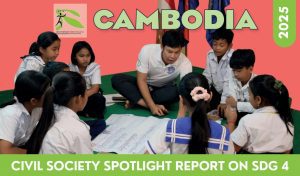
Cambodia, a lower-middle-income country with a population of over 17 million, has made significant progress in economic growth and poverty reduction. However, the country continues to face major development challenges, particularly in health, education, and living standards. Cambodia’s Human Development Index (HDI) ranking of 148 out of 193 countries highlights the need for continued investment in people-centered development. As a small and open economy highly dependent on exports, Cambodia is vulnerable to global economic changes. Manufacturing, which contributes more than 40% of economic growth and nearly one-fifth of wage employment, is strongly linked to the U.S. and China. With uncertainties in global trade, Cambodia’s economic growth is projected to slow to 4.0% in 2025 and 4.5% in 2026.
The Royal Government of Cambodia (RGC) recognizes education as a key pillar for national development and is committed to achieving SDG4: Quality Education. The Pentagonal Strategy–Phase I emphasizes inclusive development, good governance, and active involvement of all stakeholders. The Ministry of Education, Youth and Sport (MoEYS) has been working to integrate SDG4 into national education policies with a strong emphasis on inclusive and equitable education, particularly for children with disabilities. This aligns with the government’s obligations under the United Nations Convention on the Rights of the Child.
Cambodia has achieved notable progress in education access. In the 2023–2024 academic year, primary school net admission reached 97.25%. The country has also established multiple legal frameworks supporting inclusive education, including the Inclusive Education Policy and the Inclusive Education Action Plan 2024–2028. These frameworks aim to promote gender equality, social inclusion, and comprehensive support for learners with disabilities.
The Education 2030 Roadmap, launched in 2019, represents a major step toward aligning national education efforts with global commitments. Guided by the principle of “No One Left Behind,” the roadmap sets clear targets to improve learning outcomes, increase equity, and strengthen the education system. Through its Education Strategic Plans, MoEYS continues expanding early childhood education, improving teacher training, and promoting inclusive education practices.
Civil society organizations (CSOs) contribute important insights and recommendations to strengthen SDG4 implementation. These recommendations include increasing government investment in education, improving policy implementation, expanding collaboration, promoting equity, and ensuring school safety. CSOs emphasize the need for adequate resources for inclusive education, gender-responsive learning materials, and targeted support to reduce disparities in access caused by socio-economic status, disability, and geographic location.
School safety is another key concern. Strengthening child protection mechanisms, creating safe reporting systems, and improving data collection on school violence are necessary to ensure safe learning environments. Training for teachers, staff, and students on child protection policies is essential to prevent abuse and promote respect and safety in schools.
The report also highlights perspectives from Cambodian youth. Young people identify several barriers to digital education, including limited access to devices, costly internet, low digital skills, and gender-based inequalities. Youth recommend expanding free or affordable internet access, providing devices to disadvantaged students, creating inclusive digital content in local languages, and improving digital literacy nationwide.
The roles of stakeholders are clearly defined. MoEYS must lead the implementation of recommendations and strengthen coordination with CSOs. Development partners should support national priorities, while CSOs continue monitoring, advocacy, and community engagement. Communities play a vital role in supporting school development and ensuring safe and equitable learning environments.
Finally, the NGO Education Partnership (NEP), with over 78 members, plays a key role in strengthening civil society engagement in education. NEP coordinates CSO efforts, builds capacity, and represents civil society voices in national education forums, contributing to the shared vision of high-quality, inclusive education for all Cambodians.